
8 Best Meshy AI Alternatives in 2026, Compared
The right Meshy alternative depends on what you need after generation: a printable file, a textured asset, clean low poly, animation, or local control.
Meshy covers a broad 3D workflow. It turns text and images into models, adds textures, supports low poly work, rigs characters and connects to common 3D tools. That breadth makes it a useful reference point for the rest of the market.
You may need a narrower answer. A single product photo, a printable figurine, a multi-view asset and a locally hosted research model have different requirements. The cheapest subscription also tells you little unless the exports, licence and retry rules fit your work.
These eight Meshy AI alternatives are compared from their public product and pricing pages. Opolyo is the first pick for one photo and a downloadable textured or printable model. The other options move ahead when you need multi-view input, automatic rigging, a large plugin ecosystem, team production or open weights.
Why People Look for a Meshy Alternative
A search for a Meshy alternative often starts with cost, but the underlying issue is usually fit. Credits are spent on different stages and quality settings. A low starting plan can still be awkward when your work needs repeated geometry passes, private assets, a particular export or a commercial licence.
Workflow breadth creates another tradeoff. Meshy documents image and text generation, texturing, low poly controls, rigging, animation, an API and many integrations. You may value that complete path, or you may prefer a focused image to 3D tool with fewer decisions between upload and download.
The output should decide the shortlist. For printing, inspect STL or 3MF export and the mesh in a slicer. For games, inspect topology, polygon controls, textures and rigging. For a product photo, check whether one image is enough and whether the hidden surfaces are inferred or supported by extra views.
Cancellation also belongs in the comparison. Export work you need, record the licence that applied when each asset was generated, and check the end date of the current billing period before moving tools. A generation library and a subscription are separate things.
Meshy AI Cost, Credits and Meshy 6
Meshy's pricing page lists a Pro plan at $20 per month with monthly billing and 1,000 monthly credits. It also lists Premium, Ultra, Studio and Enterprise choices. Monthly credits reset instead of accumulating, while permanent credits from eligible purchases or rewards do not expire.
Meshy 6 remains a common search because many comparisons and saved projects refer to it. Meshy's homepage now announces Meshy 7 as the current release. Treat a Meshy 6 review as a view of an earlier model, then check the current generation and export controls before using that review to make a purchase.
Credit count is only one part of Meshy AI cost. A useful comparison records how many accepted assets you get after remeshing, texturing and retries. If your job ends at one textured or printable model from one photo, compare the whole path rather than one headline allowance.
Is Meshy AI Free?
Meshy's pricing page lists a Free plan with 100 credits each month and no card requirement. Those monthly credits reset on the first day of the month at 00:00 UTC. The page also says the queue priority is lower than on paid plans.
Assets made on that plan use a CC BY 4.0 licence, so attribution is part of the usage terms. Paid plans make assets private and provide the broader ownership terms described on Meshy's pricing page. Check which plan produced an asset before you publish or sell it.
What Reddit Says About Meshy
A recent r/aigamedev thread comparing Meshy and Tripo3D is divided by workflow. The original poster preferred Tripo for segmentation, retopology and polygon reduction, while replies preferred Meshy for texture alignment, its agent, rigging and the ability to continue working on an asset inside one product. That is useful sentiment, not a controlled quality ranking.
An r/3Dprinting thread asking for Meshy 6 alternatives points to a different concern: what happens after the preview. For a print decision, compare the exported mesh in the same slicer, at the same physical size, and inspect open edges, thin parts, supports and separate shells.
Reddit is most useful for finding failure modes to check yourself. It is weak evidence for permanent winners because the models, plans and defaults change quickly. Use community reports to design a small reference job, then judge the downloaded file against your own destination.
The chart compares monthly billing list prices only. Annual rates, one-time packs, usage billing and promotional prices are not converted into a monthly figure, so a tool that sells its plans in one of those shapes has no bar and is described in its own section below.
Public prices read 2026-09-08. Values are USD monthly billing list prices for the cheapest paid monthly plan, before temporary promotions. Tools without a bar sell usage billing or annual plans instead. Kaedim's Indie plan at $400 per month is a studio service price and sits off this scale.
Meshy Alternatives at a Glance
Start with input and output, then read price. A tool that accepts several views solves a different reference problem from a single-image generator. A tool that exports animation-ready files also solves a different production problem from one focused on printing.
The allowance column keeps each vendor's own wording. A limited preview, a daily generation and a monthly credit balance are not equivalent, so they are not folded into one number. The starting price column follows the same rule: where a vendor sells usage billing or annual plans instead of a monthly plan, the cell says so.
Meshy appears first as the reference. The eight alternatives follow in the ranked order used throughout the guide. Each later section explains the tradeoff that the compact cells cannot show.
| Input | Outputs | Free allowance | Starts at | Best for |
|---|---|---|---|---|
| Text, images and models for AI texturing | FBX, OBJ, USDZ, GLB, STL and BLEND, plus 3MF in the print workflow | 100 credits each month, CC BY 4.0 outputs | $20 per month for Pro | A broad generation, texturing, rigging, animation and plugin workflow |
| One image per image-to-3D generation, or a text prompt on the text route | Triangle GLB, browser exports to STL and OBJ, quad FBX, plus converter formats | Start includes 160 credits for $19.99 | $19.99 per month, or a $39.99 one-time pack | One photo to a textured or printable model with pay-as-you-go credits |
| Text, one image and multi-view images on the documented paid toolkit | GLB, FBX, OBJ and USD for games, plus STL and 3MF for printing | Free plan with 200 monthly credits | Pro, Max and Team tiers, priced on its pricing page | Segmentation, smart mesh, multi-view input and game asset preparation |
| Text, image, sketch and up to four multi-view images on the hosted engine | OBJ and GLB on the international platform | Tencent announced 20 hosted generations daily | API credit packs and usage billing rather than a monthly plan | Hosted multimodal creation or an open 2.1 pipeline for local work |
| Text, one image and optional additional views | Textured assets with low poly, high poly and quad options by plan | Generate before confirmation, then pay by result | $30 per month for Creator | Controllable high-detail assets, multi-image input and production APIs |
| Images, with multi-view on paid plans | FBX, GLB, OBJ, STL and USDZ | 100 lifetime credits and limited feature trials | Pro, Max and Ultra tiers, priced on its pricing page | Print-focused detail, portraits, reliefs and automatic part splitting |
| Text, single image and multi-image on Studio tier | FBX, GLB, OBJ, STL, 3MF, USDZ and BLEND | Starter credits on selected tools | $12 per month when billed annually for Basic | One account for several generation engines and supporting production tools |
| Sketches, reference packs, product photos, briefs and art direction | Geometry or complete assets with retopology, UVs and textures | $50 seven-day trial with 5 credits | $400 per month for Indie after the trial | Managed studio production, review, markup and revision |
| Text, images and customisable templates, plus multi-image on paid plans | GLB, OBJ and FBX in documented export workflows | Guest includes one AI 3D generation daily for personal use | $15 per month for Plus | Low poly assets, parametric templates, plugins, rigging and animation |
1. Opolyo: Image to 3D Model From One Photo
Opolyo is the direct choice when you have one picture and want a complete model. The image route takes one uploaded image per generation. It reconstructs the visible shape and infers the back and sides that the camera did not record.
You choose texture quality, triangle or quad topology and a face budget before generation. A triangle run returns a textured GLB. STL and OBJ downloads are created in the browser from that triangle result. A quad run returns FBX for a more editable mesh path.
This is a focused image to 3D workflow. It does not combine several photographs and it is not photogrammetry. If the exact hidden side matters, use a three-quarter reference that reveals more of it, edit the result, or choose a documented multi-view tool.
Opolyo ranks first here because the default searcher has one photo and needs a usable file with clear credit options. It also fits irregular work because one-time packs last 365 days. It gives up Meshy's animation, automatic rigging, plugin catalogue and larger community.

What One Model Costs on Opolyo
Start costs $19.99 per month and includes 160 credits, listed as 16 generations. Build costs $39.99 for 360 credits and 36 generations. Scale costs $89.99 for 900 credits and 90 generations. These are plan allowances, not a dollar conversion for each individual asset.
A Standard texture generation costs 10 credits. Ultra or Max textures and quad topology cost more, while the polygon budget does not change the credit quote. The generation button shows the exact credit amount for the selected settings before you submit.
The one-time option begins with 300 credits for $39.99. Pack credits remain valid for 365 days. Failed generations return their credits automatically, and every plan or pack includes a commercial licence for generated models.
Where Meshy Still Wins
Meshy is stronger when generation is the start of a character workflow. Its homepage documents automatic rigging for humanoid and quadruped characters and more than 600 motion presets. Opolyo generates geometry and texture, then leaves rigging and animation to your next tool.
Meshy's plugin ecosystem is also much larger. Its public navigation lists integrations for Blender, Unity, Unreal Engine, Bambu Studio, Creality Print, OrcaSlicer, Maya, Godot and other tools. Opolyo relies on standard exports and its converter instead of native workflow plugins.
Meshy also documents text-to-3D, an agent, texturing, print repair and a large public showcase. Its homepage reports 12 million users and 100 million generated models. Choose that breadth and community when you want one environment around many asset stages, and choose Opolyo when one photo to a downloadable model is the job.
2. Tripo AI
Tripo AI is the closest broad alternative in this list. Its homepage covers text and image generation, high-detail meshes, smart quad meshes, segmentation, printing and game exports. The documented workflow reaches farther into post-generation editing than a simple image converter.
For high detail, Tripo describes meshes up to two million polygons. Smart Mesh covers native quad meshes from 500 to 25,000 polygons. Its game workflow lists GLB, FBX, OBJ and USD, while the print workflow lists STL, 3MF and OBJ with automatic splitting for large models.
The pricing page names Free, Pro, Max and Team tiers, and places multi-view input, Smart Mesh and segmentation on the paid tiers. The page switches between monthly and annual display, so the chart above leaves Tripo without a bar and you should read the monthly figure inside the pricing interface itself.
Pick Tripo when segmentation, multi-view input or low poly preparation is central. Confirm the plan and price in your account before purchase, then export the same reference you use elsewhere and compare the actual mesh.
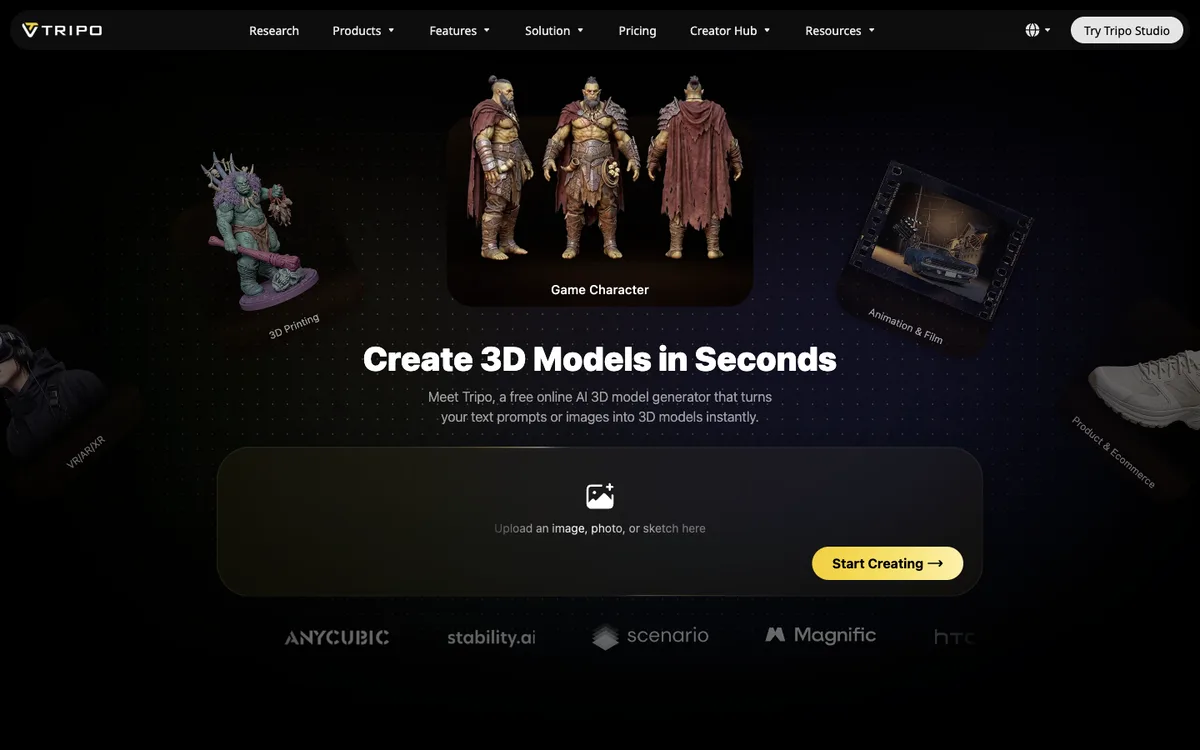
Tripo vs Meshy
Tripo vs Meshy is close because both cover image and text generation, retopology, printing and character workflows. Tripo makes segmentation, Smart Mesh and multi-view input prominent. Meshy makes its agent, automatic rigging, animation library, texturing and plugin catalogue prominent.
The r/aigamedev thread above reflects that split. Some participants valued Tripo's part separation and polygon reduction. Others kept Meshy for texture alignment, project context and the ability to rig and preview animation without leaving the product.
Choose by the stage that costs you the most time. Tripo belongs on the shortlist when separating parts and controlling topology dominate. Meshy remains the clearer choice when animation, plugins or a broad in-product asset workflow dominate.
3. Hunyuan 3D
Hunyuan 3D spans a hosted creation engine, a Tencent Cloud API and open model releases. Tencent's international launch material documents text, image and sketch input. It also documents up to four images for multi-view generation, smart topology and OBJ or GLB output.
The hosted offer is unusual in a monthly subscription comparison. Tencent announced 20 hosted generations each day for global users. Its cloud product page presents new-user API credits, prepaid credit packs and usage billing in Chinese yuan rather than a comparable consumer monthly plan.
Hunyuan is compelling when you want to move between a hosted interface and open research code. That flexibility also adds decisions about model version, hardware, installation and licence. The hosted 3.0 service and the downloadable 2.1 release are not the same product surface.
Choose hosted Hunyuan for documented multi-view and multimodal input. Choose its open 2.1 model when local deployment and access to weights matter more than a managed browser workflow.
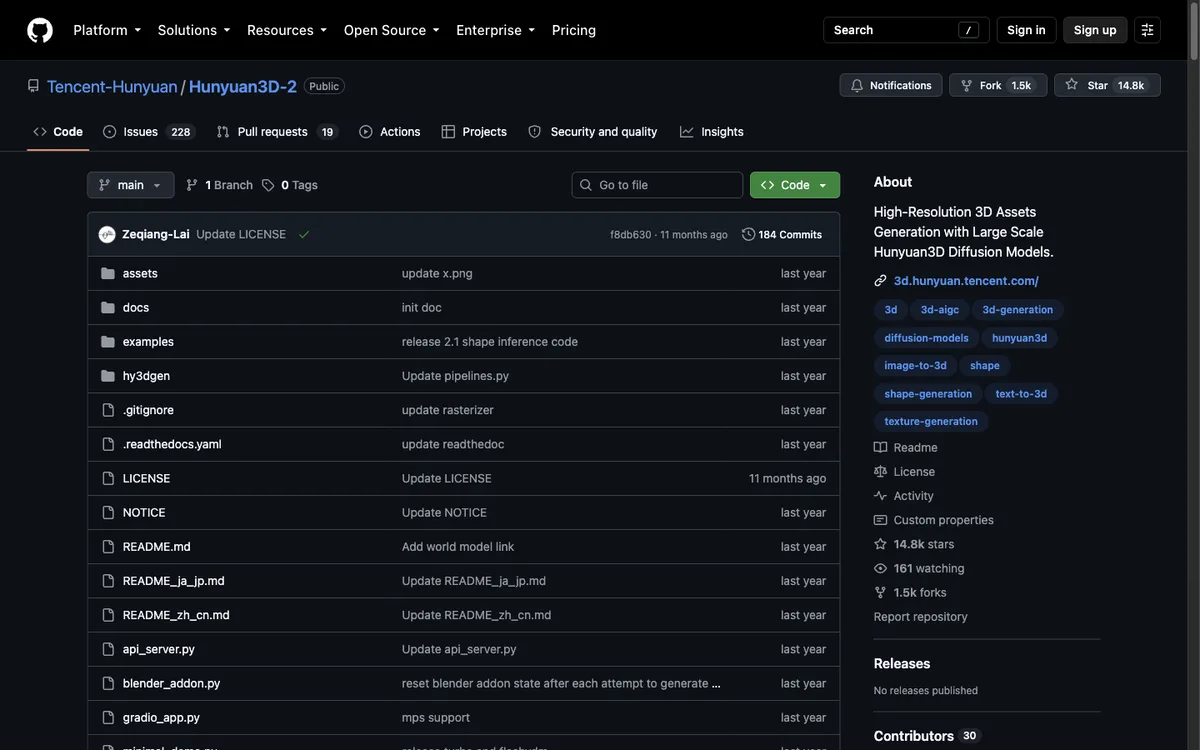
Hunyuan 3D 2.5 vs 3.0
The Hunyuan3D 2.5 paper describes a two-stage shape and texture pipeline. It introduces the LATTICE shape model, with the largest described version at 10 billion parameters, and a multi-view PBR texture system. This is research documentation, not a promise that the 2.5 weights are available for local download.
Tencent's 3.0 announcement describes the newer hosted model as focused on high-quality object asset production. The international engine accepts text, images and sketches, supports up to four reference images, and adds smart topology with triangle and quad faces.
For local work, the 2.1 release is the one with public weights. The 3.x models run as Tencent's hosted service, so the open-source table below lists 2.1 only.
4. Rodin by Hyper3D
Rodin by Hyper3D focuses on controllable asset generation. Its homepage accepts text and images and says one image is enough for most objects. Optional extra views add visual information when you need more control over the result.
The Creator plan is $30 with monthly billing. It documents multi-image to 3D, Smart Low-Poly, HD and custom textures, baked normals and more polygon choices. The free workspace lets you generate before confirmation and uses a pay-by-result path with direct credits.
Business costs $120 with monthly billing and adds the full API, high-resolution textures and high-poly quads. That makes Rodin a stronger candidate for a production API or a controlled multi-image asset than for the cheapest occasional generation.
Rodin's drawbacks are price and product scope. The useful Creator controls start above the entry prices of Opolyo, Meshy and Sloyd, while its documented rigging and animation story is less central than Meshy's or Sloyd's. Use it when shape, texture and controllability are the main purchase criteria.
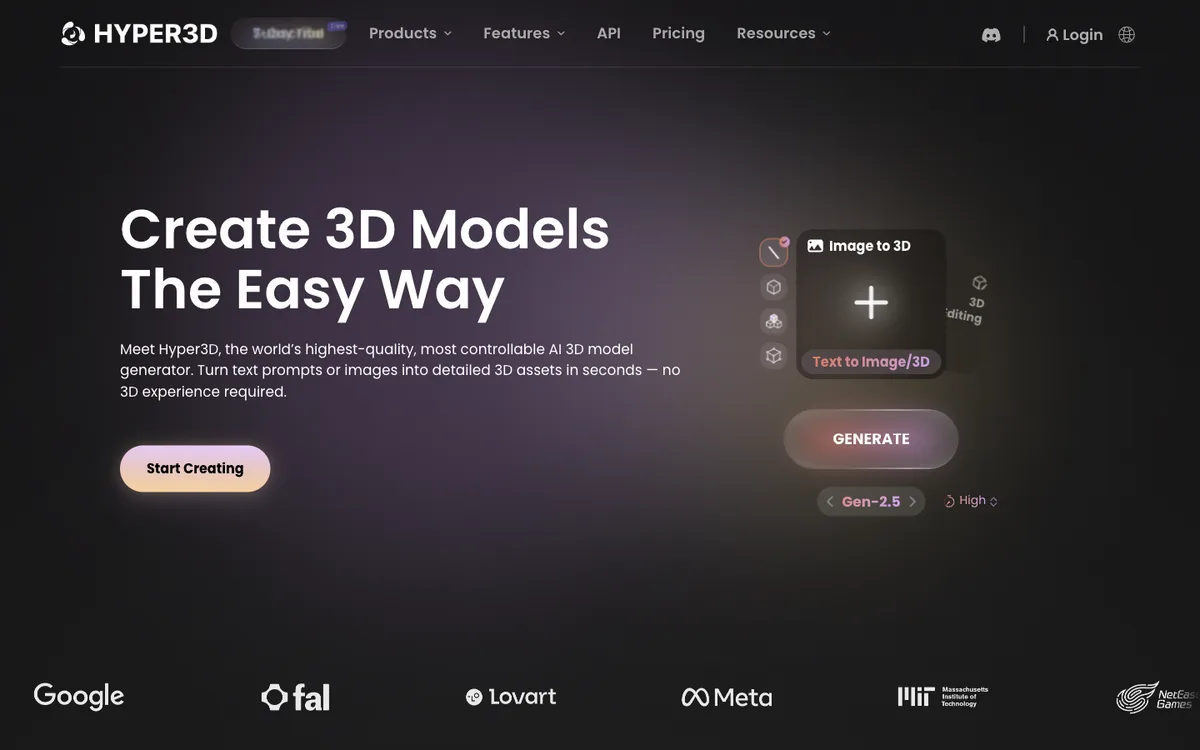
5. Hitem3D
Hitem3D now presents itself as Hi3D, an all-in-one maker platform. Its homepage centres clean geometry, fine detail, image to 3D, portrait reconstruction, PBR texturing, reliefs and production tools for physical output.
The print path is the differentiator. Hi3D documents automatic character splitting with connectors, multi-colour segmentation, direct sending to Bambu Studio and OrcaSlicer, and exports in FBX, GLB, OBJ, STL and USDZ.
The pricing comparison lists Free, Pro, Max and Ultra plans. It shows 100 lifetime credits on Free, with multi-view access, retry allowances and private commercial use on the paid plans. The paid prices move with promotions, so the chart and table send you to the live pricing page for the current figure.
Choose Hi3D when the reference is a portrait, relief or model that needs to be split for a printer. Choose a broader game workflow when rigging, animation, engine plugins and low poly iteration matter more than physical assembly.
Hitem3D vs Tripo AI
Hitem3D vs Tripo AI comes down to the work after reconstruction. Hi3D documents relief creation, portrait detail, printable part splitting, connectors and slicer handoff. Tripo documents Smart Mesh, high-detail meshes, game exports, segmentation and a broader game asset path.
Both document multi-view input and print-oriented tools. Pick Hi3D when the object will be assembled or printed and its physical split matters. Pick Tripo when clean quad topology, low polygon control or a game engine export is the stronger requirement.
Price comparison needs a live check. Both vendors present their paid tiers with switching monthly and annual displays and periodic promotions. Use the plan names and features here, then confirm the payable figure in each account before committing.
6. 3D AI Studio
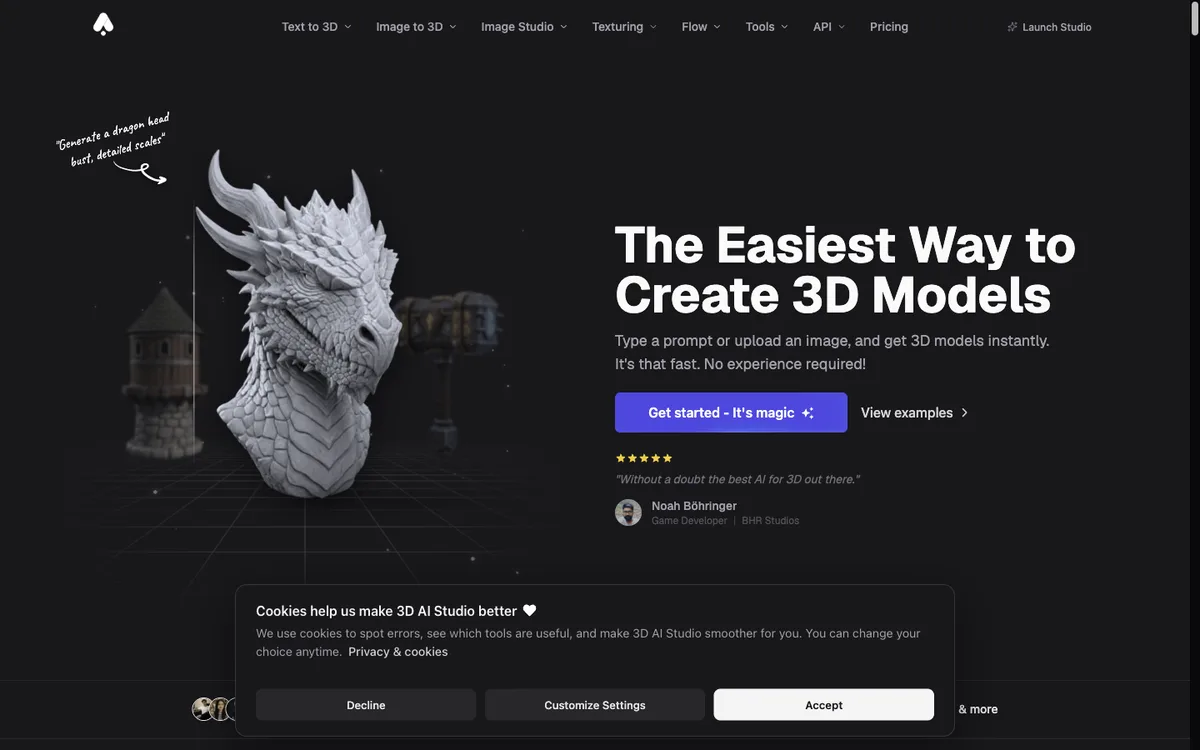
3D AI Studio is an aggregator and production toolkit rather than one model family. Its homepage says you can switch among its Prism engines and third-party engines including Meshy, Tripo, Rodin, Hunyuan, Hitem3D and Trellis from one account.
The supporting tools cover image and text generation, image editing, AI texturing, quad remeshing, level-of-detail creation and a node-based Flow canvas. Exports include FBX, GLB, OBJ, STL, 3MF, USDZ and BLEND. An API provides generation, texturing, remeshing and conversion endpoints.
The Basic plan is shown at $12 per month when billed annually with 1,000 monthly credits. Studio is shown at $23 per month when billed annually and includes multi-image generation. Monthly billing costs more than those annual rates, and the chart above uses monthly list prices only, which is why 3D AI Studio has no bar there.
This option is useful when model choice is itself part of your process. Its downside is attribution and predictability: the result depends on the selected engine and settings, so you still need to record which model made an asset and compare credit use for that route.
3D AI Studio vs Meshy
3D AI Studio vs Meshy is an aggregator against an integrated first-party workflow. 3D AI Studio lets you switch engines and adds remeshing, texturing, image tools and reusable node flows. Meshy keeps its own generation, agent, rigging, animation, printing and plugins in one named product line.
Choose 3D AI Studio when you want to compare engines without managing several accounts. Choose Meshy when consistent project context, its animation library and direct plugins matter more than model switching.
Neither subscription figure describes the full job by itself. In 3D AI Studio, generation cost varies by the selected model and settings. In Meshy, different tasks consume credits. Record accepted outputs and post-processing time for the same reference asset.
7. Kaedim
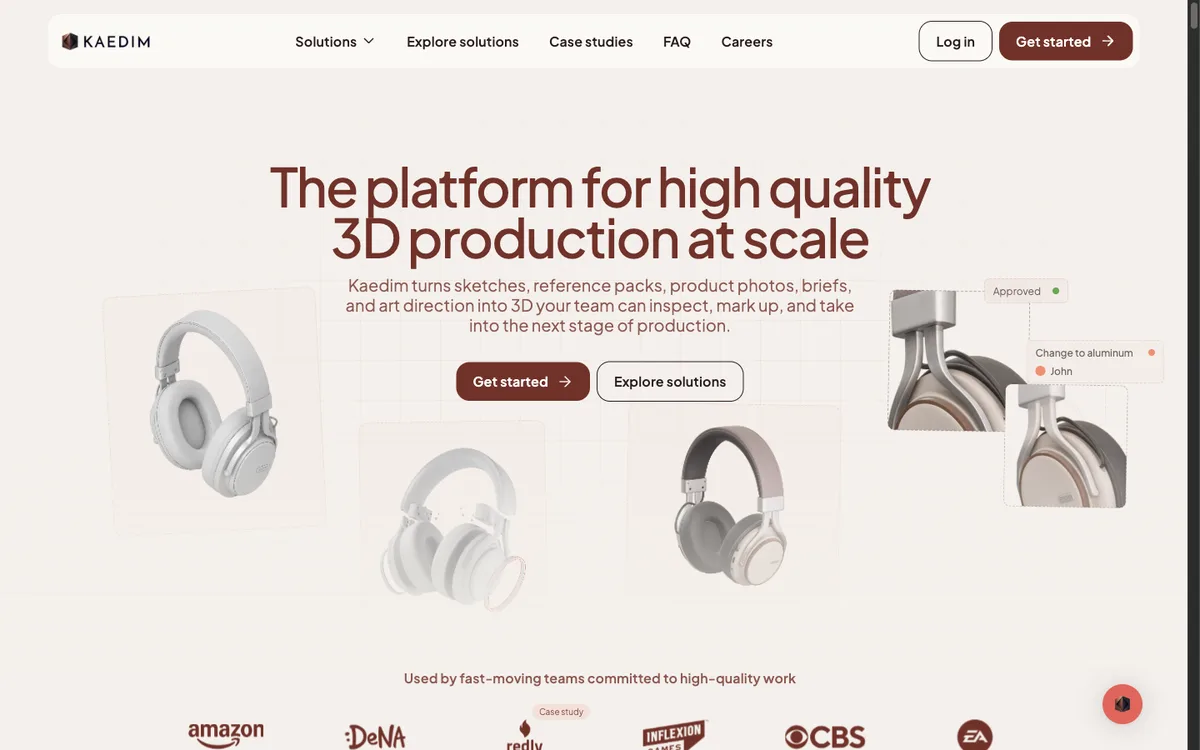
Kaedim is built for teams that want a managed 3D production loop. Its homepage accepts sketches, reference packs, product photos, briefs and art direction. The result moves through review, markup, revision and approval instead of ending at an automatic first pass.
The $50 seven-day trial includes 5 credits and up to 5 geometries, then renews to Indie. Indie costs $400 per month with 20 credits and covers up to 20 geometries or one complete asset with high-quality retopology, UVs and textures.
Pro costs $1,200 per month with 60 credits, up to 60 geometries or three complete assets, priority processing and dedicated Discord support. This is a studio service price, not a direct substitute for a low-cost self-serve credit plan.
Choose Kaedim when art direction, feedback and a shippable team process justify the spend. Skip it for casual experiments or a single inexpensive photo conversion. Opolyo, Meshy, Tripo, Rodin and Sloyd all start closer to an individual creator's budget.
8. Sloyd
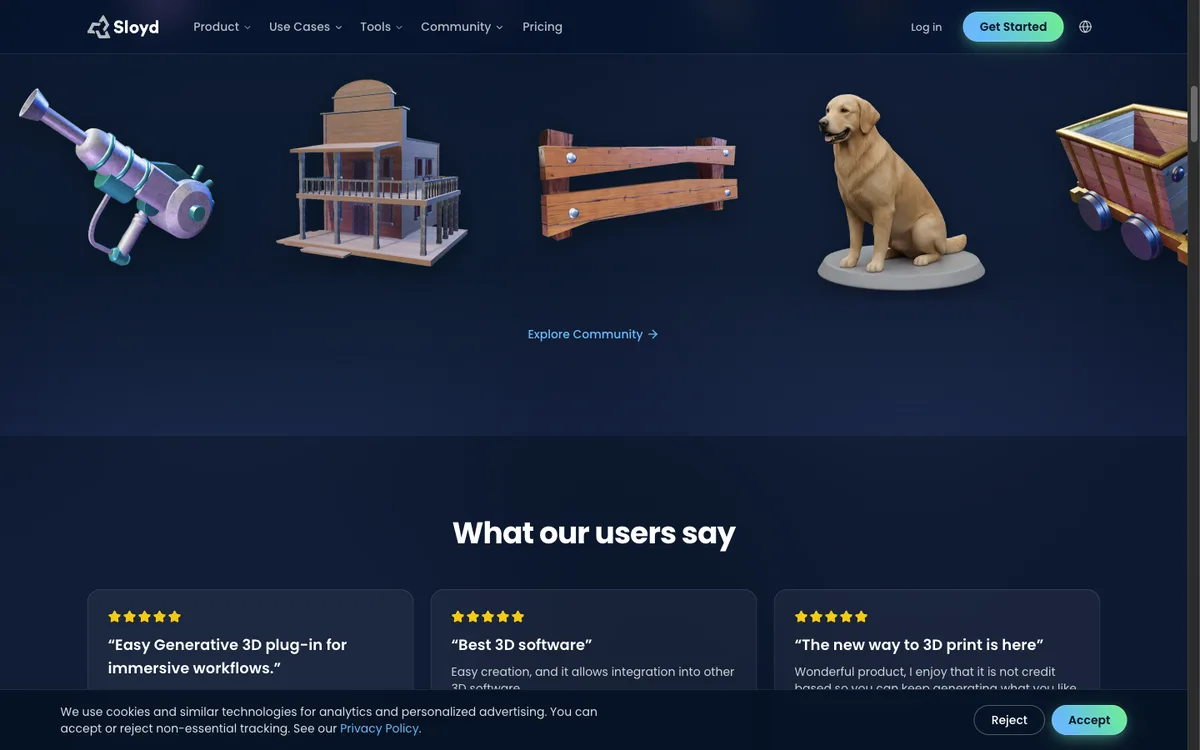
Sloyd combines AI generation with customisable parametric templates. You can start from text, an image or a controlled template, then adjust the result. That template route is useful for repeated low poly props that need deliberate variation.
Guest includes one AI 3D generation each day, community model downloads, template customisation and GLB or OBJ exports for personal use. Sloyd Plus costs $15 with monthly billing and includes unlimited standard text and image generation under its stated plan terms.
Plus also documents rigging, animation, 4K texture editing, multi-image generation through monthly credits, split-to-parts and plugins for Unity, Unreal and Blender. Pro costs $50 monthly and raises credits, parallel work, art styles, queue priority and support.
Sloyd is the strongest alternative here when template control and low poly variation sit beside rigging and plugins. Opolyo is simpler for one reference photo and a pay-once pack. Meshy has the larger documented community and a broader print ecosystem.
Open-Source Meshy Alternatives: Hunyuan3D and Trellis
Open weights change the cost model and the responsibility. You avoid a hosted per-generation charge, then supply the GPU, storage, installation time and maintenance. A research repository is a pipeline you operate, not a managed subscription with support and account storage.
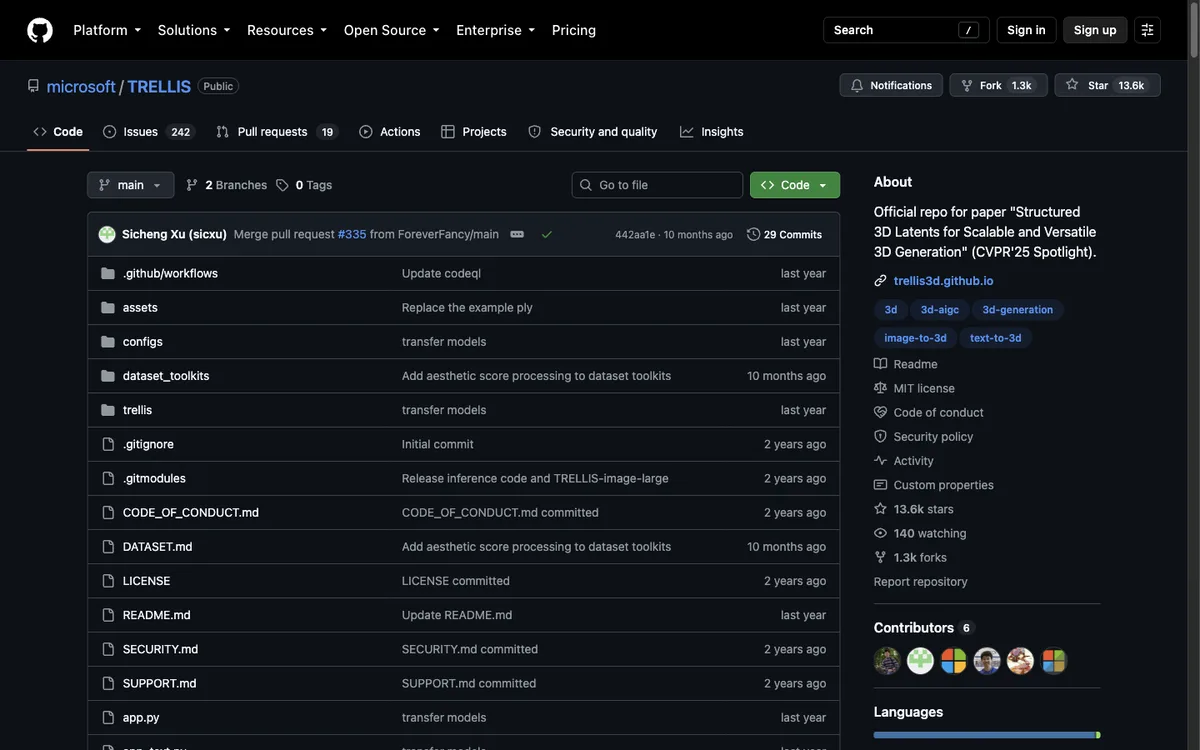
Hunyuan3D 2.1 and Microsoft TRELLIS publish weights and code. Their outputs and hardware paths differ. Hunyuan3D 2.1 separates shape and PBR texture generation, while TRELLIS can decode its structured representation into meshes, 3D Gaussians and radiance fields.
The table lists the releases that come with public weights on their model cards and repositories. Tencent's hosted 3.0 engine is discussed above; it runs as a service rather than as a download, so it is not a row here.
Read the licence before distributing a model or a hosted service. Open code does not make every dependency, training asset or generated use unrestricted. Keep the exact model revision with your project notes.
| Weights | Input | Licence | Runs on |
|---|---|---|---|
| Public 2.1 shape and paint weights, plus training code | Image to shape and image-guided PBR texture | Tencent Hunyuan Community Licence | macOS, Windows or Linux; repository lists 10 GB VRAM for shape, 21 GB for texture and 29 GB for both |
| Public image and text conditioned models up to 2 billion parameters | Image or text, with multi-image conditioning also documented | MIT | Linux with an NVIDIA GPU and at least 16 GB memory in the official prerequisites |
Running Hunyuan 3D in ComfyUI or Locally
The Hunyuan3D 2.1 repository documents installation with Python 3.10 and PyTorch, plus a local Gradio app. It lists support for macOS, Windows and Linux. The shape and paint pipelines can be called separately, which lets you generate geometry before deciding whether to spend more memory on texture.
Hardware is the first filter. The repository lists 10 GB of VRAM for shape generation, 21 GB for texture generation and 29 GB for shape and texture together. A low VRAM mode is documented for the Gradio command, but it does not remove the need to plan around a capable machine.
The official repository links a community ComfyUI integration rather than presenting it as the core package. Check that node package against the model revision you install. For a stable production setup, pin the repository commit, model files, Python environment and custom nodes together.
Trellis Image to 3D
TRELLIS image to 3D takes an image and produces structured 3D representations that can become a mesh, a 3D Gaussian or a radiance field. The repository provides a large image-conditioned model and also publishes text-conditioned variants. It recommends the image-conditioned path for better performance.
The official prerequisites specify Linux, an NVIDIA GPU with at least 16 GB of memory, Python 3.8 or newer, CUDA and compiled dependencies. That is a larger setup burden than a browser tool. It also gives you direct access to the pipeline and files.
The example converts a mesh and Gaussian result into a textured GLB and saves Gaussians as PLY. Multi-image conditioning is available through a tuning-free method, with the repository noting that it may not suit every input set. Use one clean image first, then add views only when they provide consistent information.
Which Meshy Alternative Fits Your Job
Pick the tool from the destination backwards. A printable ornament needs closed geometry and a slicer check. A game character needs topology, textures, rigging and animation. A product model from one photo needs reference fidelity and an export you can inspect.
Use one reference asset for a fair decision. Keep the image, requested settings, credit charge, export format and cleanup time the same wherever the tools allow it. Compare the downloaded asset, not only the lit browser preview.
The five options below cover the most common branches. Their cons are as important as their strengths, including for Opolyo. None of them removes the need to inspect inferred surfaces, licence terms and the file in its destination.
Opolyo
A focused one-image generator with textured and printable exports, plans and long-lived one-time credit packs.
- Takes one reference image and returns a complete inferred model
- Triangle GLB with browser STL and OBJ exports, or quad FBX
- One-time packs remain valid for 365 days
- Failed generations return credits automatically
- Commercial licence on every paid plan and pack
- No multi-view input on the image route
- No automatic rigging or animation library
- No native Blender or game engine plugin catalogue
- Hidden surfaces are inferred from one view
- Starts at a paid plan or a one-time pack
Best for: One photo to a printable or textured model with pay-as-you-go credits
Tripo AI
A broad generation and editing platform with multi-view, segmentation, Smart Mesh and print tools.
- Multi-view input is listed on paid tooling
- Smart Mesh covers native quad meshes at controlled polygon ranges
- Segmentation and automatic print splitting are documented
- Game and print export paths cover common formats
- Paid tiers are priced on a page that switches between monthly and annual display
- Advanced production features sit on paid tiers
- More tools create more settings to compare for a simple one-photo job
Best for: Multi-view assets, segmentation, topology control and part preparation
Hunyuan 3D
Tencent's hosted multimodal engine and separate open 2.1 model path.
- Hosted engine accepts text, images, sketches and up to four views
- Public 2.1 weights and training code support local work
- PBR texture generation is documented in the open 2.1 pipeline
- Tencent Cloud provides an API route
- Hosted 3.0 and open 2.1 are different versions and workflows
- Local shape and texture generation has substantial VRAM requirements
- Consumer access is a daily hosted allowance plus API billing, not a monthly plan
- The 3.x models run as a hosted service without public weights
Best for: Open model control, local deployment or Tencent's hosted multi-view engine
Hunyuan3D 2.1 model card, Hugging Face, Hunyuan3D 2.1 open model repository
Rodin
Hyper3D's controllable image and text generation tool with optional extra views and production tiers.
- One image works for most objects and extra views are optional
- Creator adds Smart Low-Poly, HD texture and baked normals
- Business adds API access and high-poly quads
- Pay-by-result preview path is documented
- Creator starts at $30 with monthly billing
- Full API access starts on the $120 Business plan
- Rigging and animation are less central than on Meshy or Sloyd
Best for: Controlled geometry, texture detail, multi-image references and production APIs
Meshy
The broad reference platform for generation, texturing, rigging, animation, printing and plugins.
- Image and text generation plus AI texturing
- Automatic rigging for humanoids and quadrupeds
- More than 600 documented motion presets
- Large plugin and slicer integration catalogue
- Large documented user and model community
- Monthly plan credits reset instead of accumulating
- Free-plan assets require CC BY 4.0 attribution
- A broad toolset can be more than a focused one-photo job needs
- You still need to inspect downloaded geometry and inferred surfaces
Best for: Characters, animation, plugins and a broad all-in-one asset workflow
Our take
For the default searcher with one photo, a printable or textured model, and a preference for pay-as-you-go credits, start with Opolyo. Its input rule is simple, its plan and pack numbers are explicit, failed generations return credits, and the result moves into print or 3D software through standard files.
Choose Tripo for segmentation, Smart Mesh or multi-view input. Choose Meshy for automatic rigging, animation, text-to-3D breadth, plugins and community. Choose Hunyuan3D for open 2.1 weights or Tencent's hosted multimodal path. Choose Rodin for controlled high-detail or API work. Consider Sloyd for templates and low poly variation, Hi3D for print splitting and portraits, 3D AI Studio for engine switching, and Kaedim for managed team production.
For 3D Printing
For 3D printing, the winner is the file that survives slicing at the intended scale. Opolyo exports STL from its closed triangle mesh and gives you a direct one-photo path. Hi3D adds automatic splitting, connectors and slicer handoff. Tripo documents print splitting and STL, 3MF or OBJ output.
Meshy is also a strong print choice. Its homepage documents watertight and manifold output, printability checks, automatic repair, multi-colour splitting and direct slicer integrations. That broader print ecosystem is a clear Meshy advantage when you use those destinations.
Always open the export in your slicer. Set physical size, inspect every layer, and look for thin parts, floating shells and support problems. A watertight label does not choose wall thickness or a stable print orientation for you.
For Game Assets and Low Poly
Tripo and Sloyd deserve the first look for low poly work. Tripo's Smart Mesh documents native quads from 500 to 25,000 polygons. Sloyd combines AI generation with customisable templates, plugins, rigging and animation on paid plans.
Meshy remains strong for a character that needs to move. Low Poly Mode, controllable polygon count, automatic rigging, motion presets and engine plugins keep more stages in one workflow. Opolyo provides face budgets and quad FBX, then expects you to handle rigging and animation elsewhere.
Judge a game asset in engine. Count materials and texture maps, inspect deformation, create collision and measure the runtime cost in the target scene. A clean still render does not answer those questions.
For a Single Product Photo
Opolyo is the default choice for a single product photo. The workflow asks for one image, lets you choose texture, topology and face budget, then returns a downloadable file. A three-quarter product view supplies more real information about depth than a flat front view.
Rodin also documents that one image is enough for most objects, with optional extra views when more control is needed. 3D AI Studio lets you compare engines, and Tripo adds multi-view when one photo does not describe the required surfaces.
None of these single-image paths measures the unseen back. Use a photo with a complete silhouette, even light and little lens distortion. If a label, port or rear mechanism must be exact, provide a supported extra view or edit the generated model against another reference.
Switching From Meshy: Export, Licence, Cancel
Switch after you preserve the work already attached to the account. Models, licence records, references and plugin habits can matter more than the next monthly charge. Give yourself one billing period for a controlled handoff.
Use one representative asset to compare the new workflow. The steps below keep the decision reversible until the new file opens correctly in your real destination.
Export your existing models
Download the original files, textures and any useful remeshed or rigged versions. Keep project names and reference images beside the exports so you can trace each asset later.
Check the licence for what you made
Record the plan and licence that applied when each asset was generated. Free-plan attribution and paid-plan ownership terms differ, and a later subscription change does not rewrite your project notes.
Run one reference photo on the new tool
Choose a normal job, not an unusually easy subject. Match texture, topology and polygon settings as closely as the products allow, then record the credits and time used.
Compare the exported file
Open both files in Blender, your game engine or your slicer. Check hidden surfaces, scale, normals, texture links, polygon count and the cleanup required for acceptance.
Cancel at the end of the billing period
Meshy's pricing FAQ directs you to Settings, Subscription, then Cancel Plan. Confirm the effective date and keep the receipt or account confirmation with your records.
Move the plugin workflow
Replace each plugin action with the new import, export or converter step. Validate one complete asset before removing a working integration from Blender, Unity, Unreal or a slicer.
Meshy AI Alternatives FAQ
Yes. Meshy's Free plan lists 100 credits each month with no card required. Assets made on that plan use a CC BY 4.0 licence, which requires attribution, and the queue has lower priority than paid plans.
Meshy's pricing page says web app data is stored with Amazon Web Services in the United States and is not shared or used for training without consent. Review the current privacy policy and avoid uploading reference material you do not have permission to use.
Meshy's public pricing page lists Pro at $20 per month with monthly billing and 1,000 credits each month. It also lists Premium, Ultra, Studio and Enterprise tiers, while the Free plan has 100 monthly credits.
Meshy's pricing page says premium subscribers own the assets they create and may distribute or sell them, subject to rights in the input material. Free-plan output is licensed under CC BY 4.0 and requires attribution, so record which plan produced the model.
Opolyo is a better fit for one photo, a textured or printable file and pay-as-you-go credits. Tripo is a better fit for segmentation and multi-view work, while Hunyuan3D is a better fit when open 2.1 weights and local control matter. Meshy remains stronger for automatic rigging, animation, plugins and community breadth.
It can be, especially if you use Meshy's documented printability checks, automatic repair, 3MF workflow and slicer integrations. Compare the exported model in your own slicer because scale, thin parts, supports and the inferred back still decide whether a specific print works.
Meshy covers image and text generation, PBR texturing, low poly controls, rigging, animation and many plugins in one product. It is a strong broad workflow, but a focused tool can fit better when you only need one photo converted or when multi-view segmentation is the priority.
Start with Opolyo when you have one image and need a downloadable textured or printable model. Use Tripo or Rodin when optional extra views and post-generation controls matter, and use Hunyuan3D 2.1 when you want to operate an open local pipeline.
Yes, when you choose a format that the destination accepts. GLB, FBX and OBJ are common interchange choices, while STL is intended for geometry in a print workflow. Verify scale, axes, materials and texture links after import.
Tencent publishes Hunyuan3D 2.1 weights and training code under the Tencent Hunyuan Community Licence. Microsoft publishes TRELLIS code and pretrained models under the MIT Licence. The hosted Hunyuan 3.0 engine is a separate service without public weights.
Yes. A failed Opolyo generation returns its credits to your balance automatically. There is no separate claim form for that credit return.
Start is $19.99 for 160 credits, Build is $39.99 for 360 credits, and Scale is $89.99 for 900 credits. A one-time pack starts at 300 credits for $39.99 and remains valid for 365 days.
Yes. Rodin documents full API access on Business, and 3D AI Studio documents a pay-as-you-go REST API across generation and processing tools. Tencent Cloud offers a Hunyuan 3D API, while Sloyd lists separate prepaid API pricing from its web app plans.
Try Opolyo first if your input is one photo and your output is a printable or textured model. Try Tripo first for segmentation or multi-view, Meshy for rigging and animation, and Hunyuan3D 2.1 or TRELLIS when local operation is the requirement.
Sources and References
- Hunyuan3D 2.1 model card, Hugging Face (accessed 2026-09-08)
- Hunyuan3D 2.1 open model repository (accessed 2026-09-08)
- Microsoft TRELLIS open model repository (accessed 2026-09-08)
- glTF Runtime 3D Asset Delivery, Khronos Group (accessed 2026-09-08)
Keep going with one photo
Editorial, Opolyo
We build Opolyo and we run everything we write about here, on the same plans and the same credits as everyone else.
Try the first Meshy alternative on this list
Upload one clear photo, choose the texture and topology, then inspect the complete model before you download it.